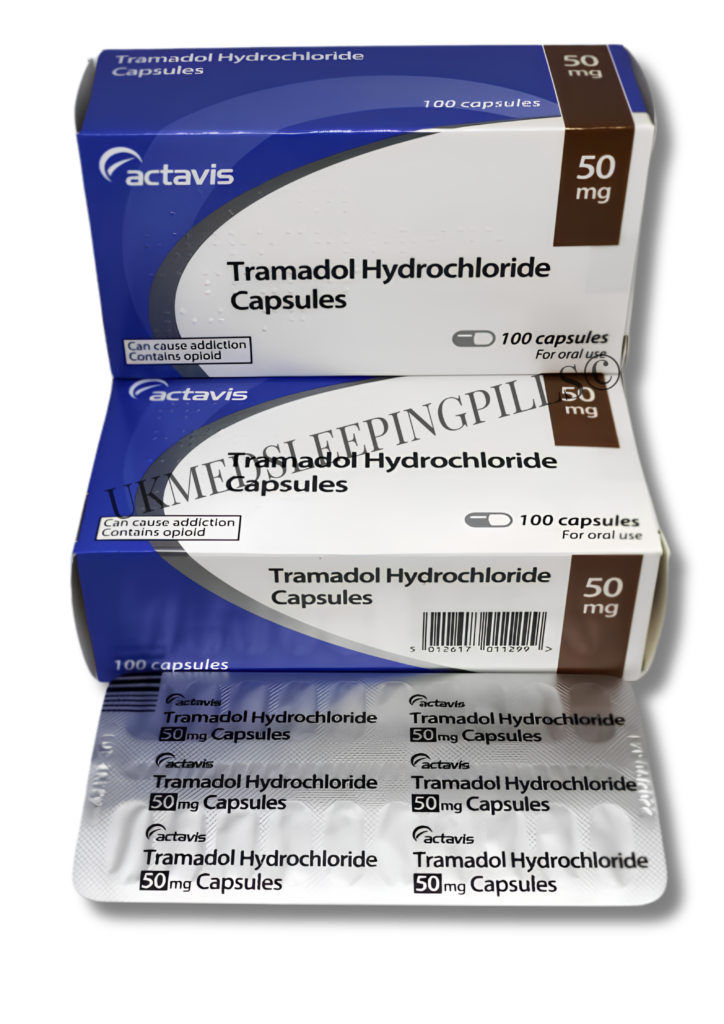
£68.80
We process all orders for next day Guaranteed delivery from our side but in same rare cases there would be a 1 day delay from Royalmail side.
Pronunciation: TRAM-a-dol
Generic name: tramadol
Brand names: ConZip, Qdolo, Ultram, Ultram ER
Dosage form: oral tablets (50 mg, 100 mg), extended-release tablets (100 mg, 200 mg, 300 mg), extended-release capsules (100 mg, 200 mg, 300 mg), oral solution (5 mg/mL)
Drug class: Opioids
Tramadol is an opioid agonist that may be used to treat moderate to moderately severe chronic pain in adults, when other pain treatments such as non-opioid pain medicines do not treat your pain well enough, or you cannot tolerate them.
Brands of tramadol include ConZip, Qdolo, Ryzolt, Ultram, Ultram ER, and Ultracet. Many have been discontinued, but generic tramadol is still available.
Taking tramadol in combination with other pain-relieving medicines such as acetaminophen, ibuprofen, or aspirin can provide better pain relief than just taking one pain-relieving medicine by itself (see Can you take tramadol in combination with acetaminophen, ibuprofen, or aspirin?)
Tramadol first gained FDA approval on March 3, 1995. Originally, it was classified as a non-controlled substance, but it was reclassified in 2014 to Schedule IV of the Controlled Substances Act with restrictions on its prescribing. Tramadol is an opioid (see Is tramadol an opioid?).
A person’s genetics can affect the pain-relieving properties of tramadol (see How do genetics affect tramadol?).
Tramadol is used for the management of moderate to moderately severe pain in adults, including postoperative pain (pain after surgery).
Tramadol treats pain severe enough to require opioids and may be used as an alternative to other forms of pain relief that did not relieve pain well enough or were not tolerated.
Tramadol extended-release capsules may be used by adults who require around-the-clock treatment of their moderate to moderately severe chronic pain for an extended time.
Tramadol should not be used in children younger than 12 years old, or anyone younger than 18 years old with other risk factors (such as breathing problems), or who have recently had surgery to remove their tonsils or adenoids.
Yes, tramadol is an opioid. The opioid activity of tramadol is due to its binding to mu-opioid receptors.
Get emergency help or call 911 right away if you take too many tramadol (overdose). When you first start taking tramadol, when your dose is changed, or if you take too much (overdose), serious or life-threatening breathing problems that can lead to death may occur. Ask your healthcare provider about medicines like naloxone or nalmefene that can be used in an emergency to reverse an opioid overdose.
Taking tramadol with other opioid medicines, benzodiazepines, gabapentinoids (gabapentin or pregabalin), alcohol, or other central nervous system depressants (including street drugs) can cause severe drowsiness, decreased awareness, breathing problems, coma, and death.
Do not take tramadol with any other medicine that contains tramadol. Check the label of every pain medicine you take, as some combination products contain tramadol.
You should be given a Medication Guide each time you fill a tramadol prescription. Read it every time, even if you have taken tramadol before, because the information may have changed. Your healthcare provider or pharmacist should also go through the risks of tramadol and how to take it safely with you, and explain what to do in an emergency.
Never give anyone else your tramadol. They could die from taking it. Selling or giving away tramadol is against the law.
Store tramadol securely, out of sight and reach of children, and in a location not accessible by others, including visitors to the home.
The most common side effects of tramadol are:
Dry mouth is also commonly reported with the extended-release forms of tramadol.
A person’s genetics can affect their response to tramadol, including their risk of side effects (see How do genetics affect tramadol?).
Tramadol may cause serious side effects, some of which may be fatal.
Tramadol can slow or stop your breathing and may be habit-forming. MISUSE OF THIS MEDICINE CAN CAUSE ADDICTION, OVERDOSE, OR DEATH, especially in a child or other person using the medicine without a prescription. Keep this medicine where others cannot get to it. Do not take more tramadol than prescribed, as an overdose can be fatal. Selling or giving away this medicine is against the law.
Seek medical attention right away if you have symptoms of serotonin syndrome, such as agitation, hallucinations, fever, sweating, shivering, fast heart rate, muscle stiffness, twitching, loss of coordination, nausea, vomiting, or diarrhea.
Seizures have been reported in patients taking tramadol. Your risk of seizures is higher if you are taking higher doses than recommended. Seizure risk is also higher in those with epilepsy or a history of seizures, and in those taking certain antidepressants, other opioids, MAO inhibitors, or other medicines that lower the seizure threshold.
You should not take tramadol if you have significant breathing problems, acute or severe asthma in a setting where you cannot be monitored, a blockage in your stomach or intestines, or if you have taken an MAO inhibitor in the past 14 days (isocarboxazid, linezolid, methylene blue injection, phenelzine, tranylcypromine, and others). Tell your doctor before starting tramadol if you have a head injury or increased pressure inside your skull, as tramadol should be used with particular care in these situations.
Prescribers are advised not to prescribe tramadol for people who are suicidal or prone to addiction, and to use it with caution in people taking tranquilizers or antidepressants, or drinking heavily. If you are struggling with thoughts of harming yourself, or with your use of any medicine, tell your healthcare provider so they can help you find the right treatment and support.
Fatal side effects can occur if you use this medicine with alcohol, or with other drugs that cause drowsiness or slow your breathing. People taking extended-release forms of tramadol should not consume alcohol-containing beverages at the same time. Alcohol is also not advised with immediate-release forms of tramadol.
Serious allergic reactions, including anaphylaxis, have occurred with tramadol, some of which caused death. People who are allergic to other opioids are at higher risk. Other hypersensitivity reactions include itching, hives, narrowing of the airways, swelling of the face and airways (angioedema), and serious skin reactions such as Stevens-Johnson Syndrome. Get emergency medical help if you have signs of an allergic reaction to tramadol (symptoms include hives, difficulty breathing, swelling in your face or throat) or a severe skin reaction (fever, sore throat, burning in your eyes, skin pain, a red or purple skin rash that spreads and causes blistering and peeling).
Tramadol may make pain worse rather than better in some people, an effect called opioid-induced hyperalgesia. Talk to your doctor if the pain you have increases, if you feel more sensitive to pain, or if you have new pain after taking tramadol.
Tramadol extended-release capsules and tablets may complicate a healthcare provider’s clinical assessment of an acute abdominal condition. They are not recommended for people with severe liver or severe kidney impairment.
Taking tramadol during pregnancy may cause life-threatening withdrawal symptoms in the newborn, known as neonatal opioid withdrawal syndrome (NOWS).
Some people are “ultra-rapid metabolizers” of tramadol because of a variation in an enzyme called CYP2D6. Their bodies convert tramadol into its active form faster than usual, which can produce dangerously high opioid levels even at a normal dose. Life-threatening breathing problems and deaths have occurred in children for this reason, including after surgery to remove the tonsils or adenoids. Tramadol should not be given to a child younger than 12 years old, or to anyone younger than 18 years old who has recently had surgery to remove the tonsils or adenoids. Extended-release tramadol should not be given to anyone younger than 18 years.
Tramadol may cause drowsiness or affect your ability to drive or perform hazardous tasks. Do not perform these tasks if tramadol causes confusion, mental impairment, or drowsiness.
Tramadol can cause withdrawal symptoms if stopped suddenly after being taken for a long period of time. Symptoms may include restlessness, drug craving, anxiety, and sweating. Do not stop taking tramadol suddenly without talking to your healthcare provider, as stopping abruptly can cause serious withdrawal symptoms and uncontrolled pain (see How long does tramadol withdrawal last?).